Your Challenge:
Long-Duration Energy Storage

Hello people with radical new ideas!
We need breakthrough innovations to store energy. Long-term. Efficiently. Cost-effective. We need bold ideas. We need you.
To play its part in the fight against climate change, Germany must become climate-neutral by 2045 and secure its energy supply exclusively from renewable sources. The pressure to act has also increased as a result of the Ukraine war, as gas has lost its appeal as a transitional technology and - and Germany's independence in terms of energy supply has become massively more important. In view of these new existential threats, the increasingly frequent natural disasters and extreme weather events, the share of renewable energies must rise sharply over the next two decades. At the same time, baseload nuclear and coal-fired power plants are to be completely taken off the grid by 2038 and replaced by wind and solar power.
In this context, long periods without significant solar and wind energy potential pose a particular challenge, so-called dark lulls. During these dark lulls, the output of wind and solar power is only a fraction of the usual average output, so that the energy demand cannot be met even with the help of load management and short-term storage. In Germany, several dark lulls with a length of more than 48 hours occur per year, but in individual cases they can also last for up to ten days. During these periods, long-term energy storage, i.e. energy storage with a storage duration of at least ten hours, plays an essential role in ensuring the stability of the power grid. In addition, long periods usually extend through the winter, during which energy generation will lag behind energy demand in the future.
Long-term energy storage is a central building block for energy autonomy and the achievement of climate targets, and at the same time a growing multi-billion market, which, however, can only be served inadequately with the currently market-ready technologies.
Allow data transfer to/from vimeo.com? (learn more)
The Challenge: Store energy and efficiently provide power for more than ten hours without using critical raw materials.
The Challenge will identify breakthrough technological approaches that enable long-term, efficient, and cost-effective energy storage. Key factors are raw material and system costs, self-discharge, storage efficiency, lifetime, energy density, and technical and economic scalability of the project idea.
We support:
Breakthrough innovations
Breakthrough innovations
Teams participating in this Challenge are fully challenged. SPRIND therefore provides intensive and individual support. This includes funding the teams with up to €1 million in Stage 1 of the Challenge and up to €3 million in the 2nd and final Stage. In order to help the teams develop their full potential, SPRIND provides them not only with financial support but also with a coach who accompanies, advises and networks the work of each team.
To enable the teams to concentrate fully on their innovations, we provide funding quickly and unbureaucratically. The first stage started in December 2022: After one year, the jury decided on the basis of interim evaluations which teams would continue to participate in the Challenge. As finalists, these teams are given the opportunity to drive their project forward for another year and a half until the end of the challenge in May 2025 and to comprehensively demonstrate their breakthrough.
Thinking one step further: Ideas with the potential for a breakthrough innovation must be brought to market to benefit us all - promising projects in this sense can therefore continue to be supported by SPRIND after the Challenge has ended.
Allow data transfer to/from vimeo.com? (learn more)
Challenge complete
In June 2025, the jury met for the last time and honored all teams of the second stage as winners of the Challenge. The four finalists had all made impressive progress in the further development of their technology for long-duration energy storage. Their work now lays the foundation for a more resilient, decarbonized energy future and shows what’s possible when bold ideas receive the support they need to grow.
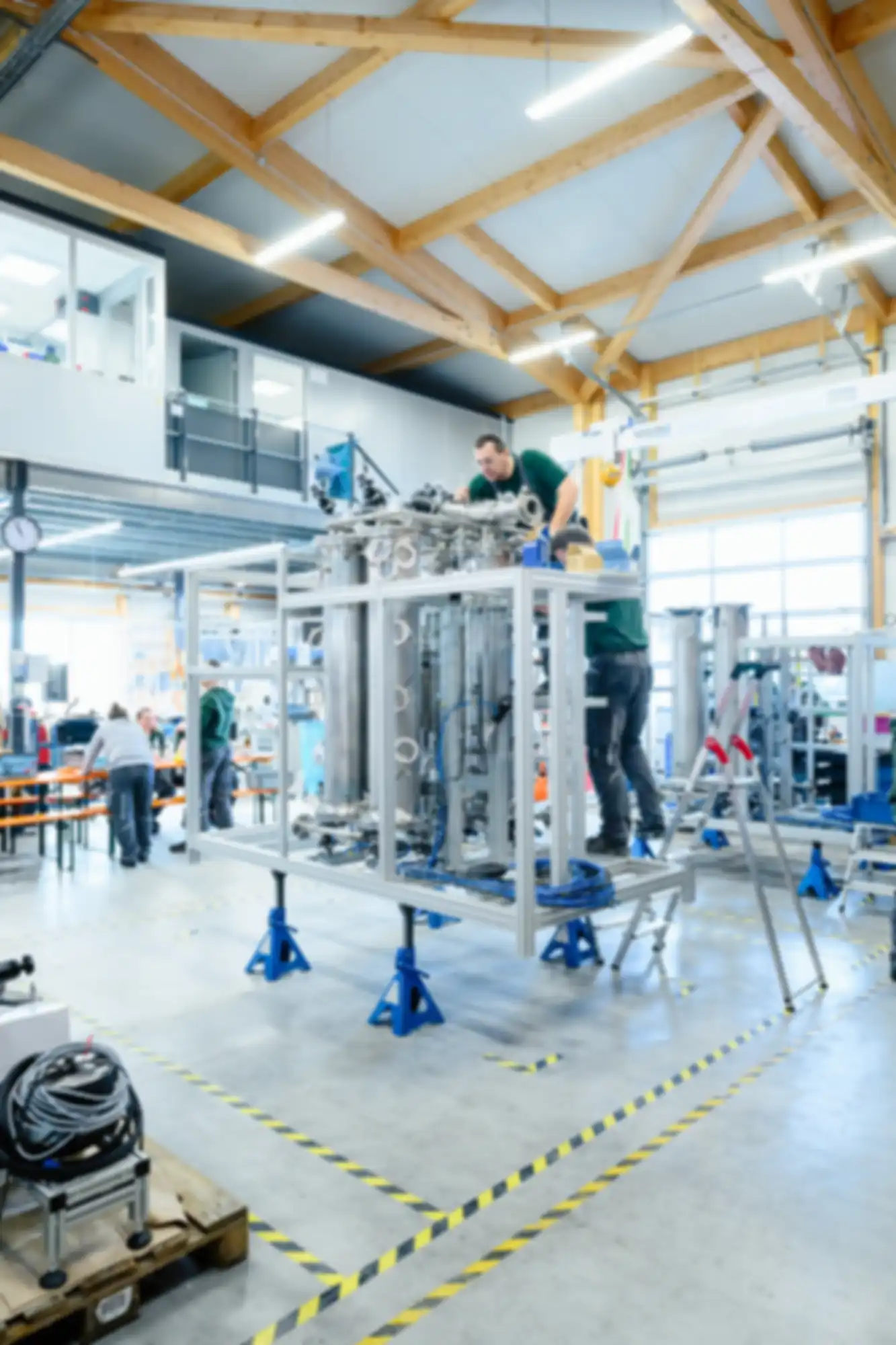
Science Youtuber Jacob Beautemps was on site at the Challenge Team Unbound Potential at Breaking Lab.
The Jury

Gitanjali DasGupta

Sebastian Scholz

Anna Grevé

Pasquale Salza

Pilar Gonzalez
Nick de la Forge
FAQ
Do you have any questions about the Challenge? Write to us at challenge@sprind.org.
More about this topic
Magazine Articles
More Challenges and Funken
Circular Biomanufacturing
The teams are challenged to develop an end-to-end prototype that processes various carbonaceous waste streams into new products as a continuous bioproduction process.
Carbon-to-Value
In the Challenge, the teams developed a solution that removes CO₂ from the atmosphere in the long term, is scalable and can be implemented in an economic business model.
THE ZINC-BROMINE
BATTERY 2.0
How HalioGen Power creates a membrane free redox flow battery
We are developing the new generation of Redox Flow Batteries: A membrane-free battery,says Dr Lewis Le Fevre, summarising HalioGen Power's innovative approach. No membrane means 30 per cent lower manufacturing costs and longer battery life.
The membrane of a redox flow battery fails after about eight years, at which point it has to be replaced or the battery will stop working,explains Le Fevre, CTO and co-founder of HalioGen Power.
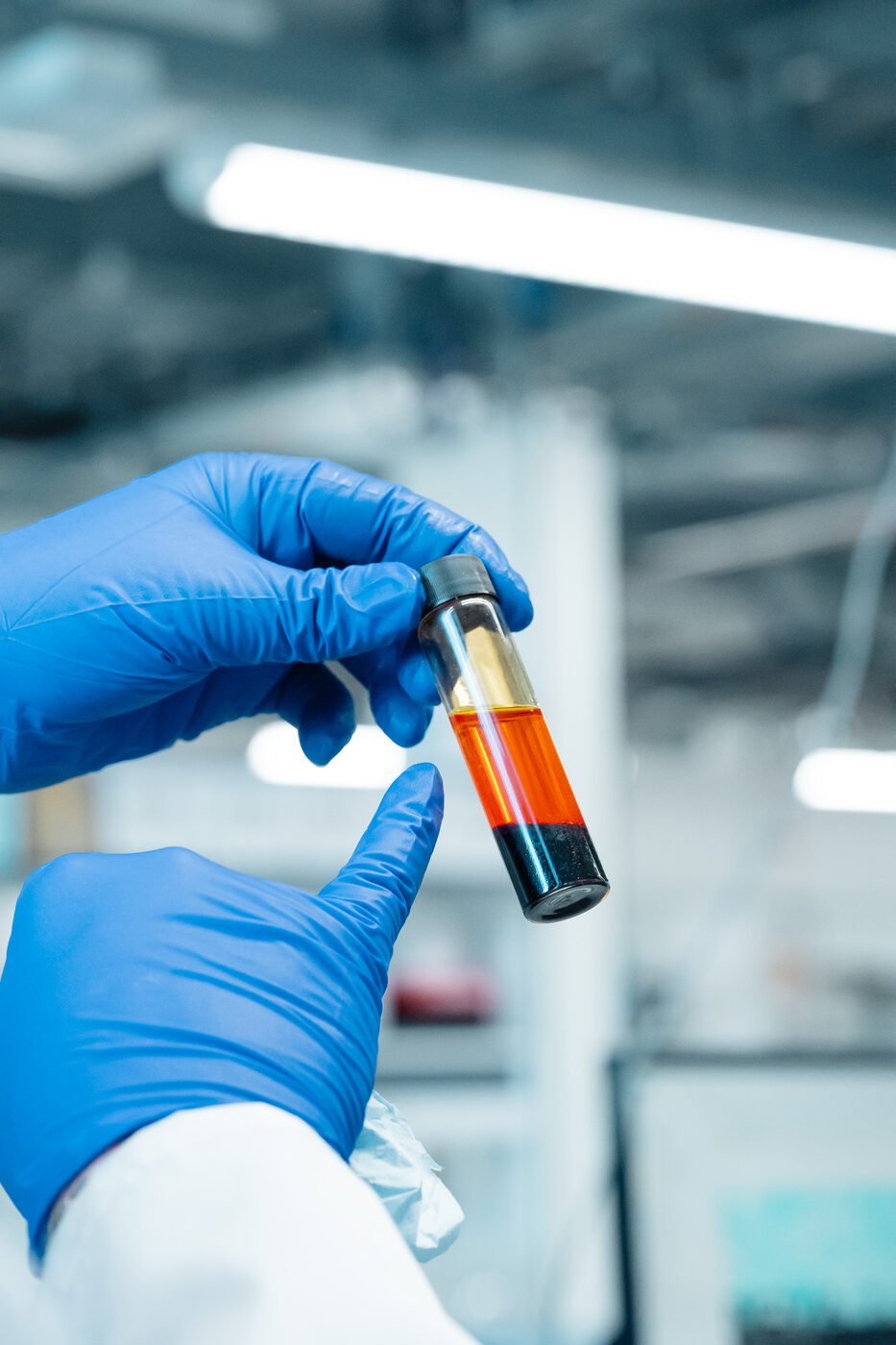
Bromide oxidation produces various bromide species including bromine gas, which is very toxic,explains Le Fevre. And the zinc also causes problems:
Deposits called dendrites form on the zinc electrode. These dendrites will grow non-uniform, so you end up having tree-like structures coming off your electrode.The dendrites can pierce the membrane of the battery and cause a short circuit. To prevent this, the distance between the electrodes must be relatively large.
However, this means higher resistance and therefore lower performance,says Le Fevre, summing up the complications.
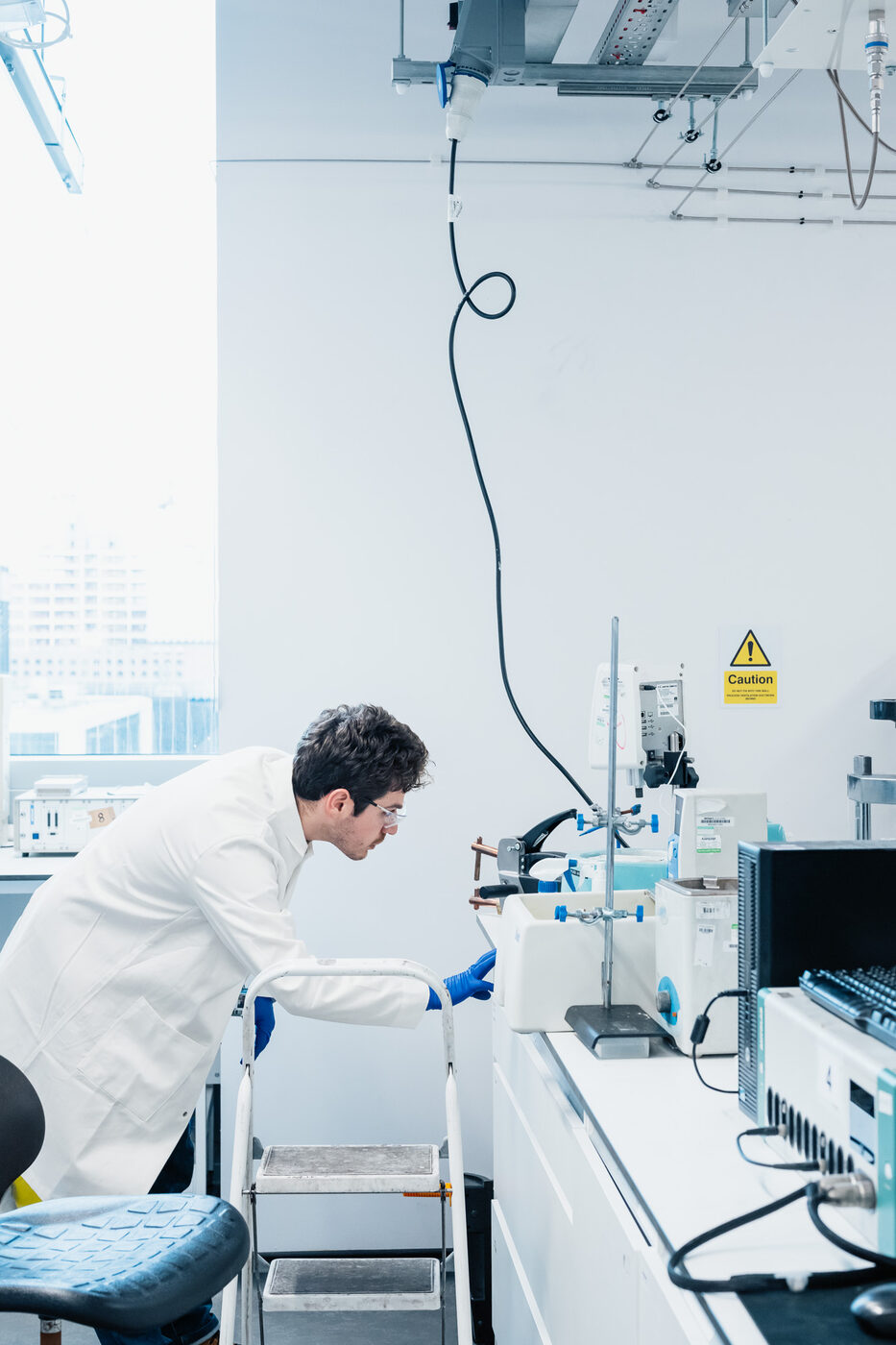
We have eliminated one of the most expensive components: vanadium,says Le Fevre.
Vanadium is even rarer than nickel and cobalt, and 70% of it comes from China.
I've always used to say to people, I could do it better. Now I really want to do it better.
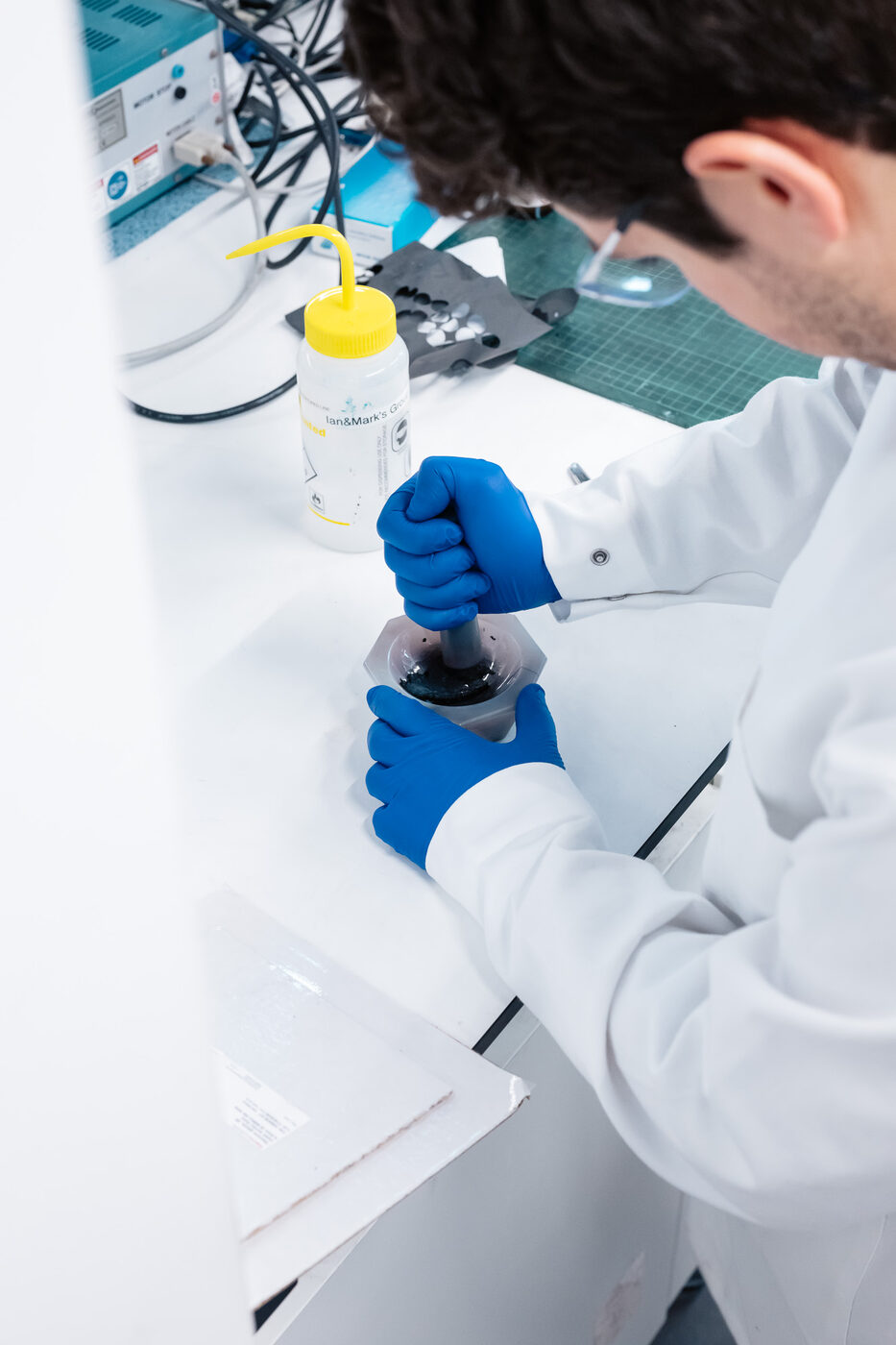
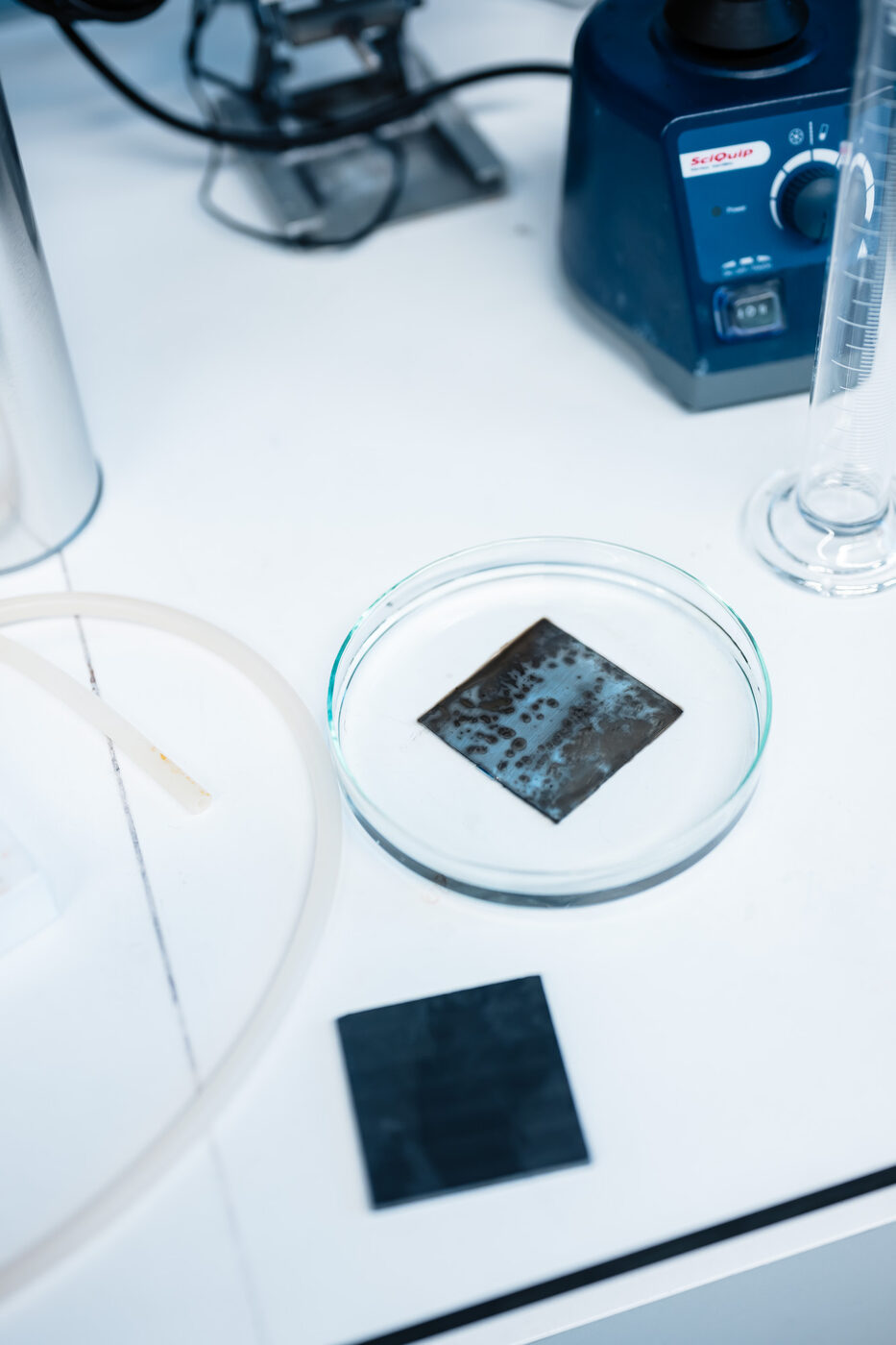
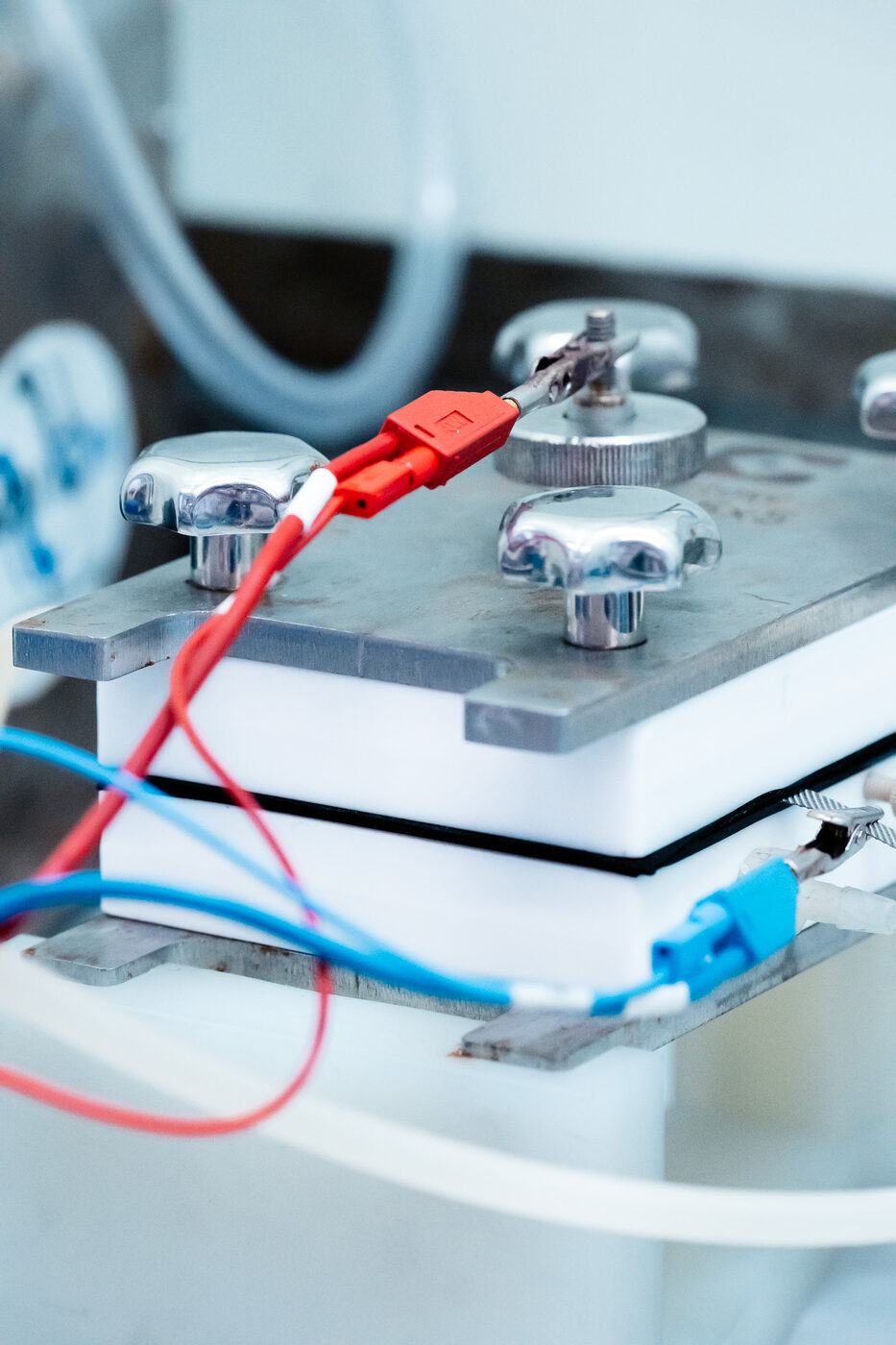
We have found a way of electrochemically depositing a protective layer on the zinc surface that increases corrosion resistance and significantly reduces dendrite growth.
What the adjustable protective layer consists of is still a secret, but Le Fevre reveals:
It is a so-called solid electrolyte interface, it is generated by electro deposition, but it's mainly made from a very widely available food additive and it's very thin. We can grow a protective layer with a tunable thickness of less than 100 microns.
My family lives in Australia. There was a big lithium-ion battery factory in Western Australia. When the temperature exceeded 45 degrees Celsius for several days, the battery cooling system failed and the lithium-ion battery burst into flames,he says.
There is a need for energy storage systems that can withstand extreme temperatures, especially heat.What's more, extreme heatwaves are becoming more frequent as a result of the climate crisis.
Our system works even at 90 degrees,says Le Fevre. This opens up a new market for HalioGen Power:
We can sell our product in countries where redox flow batteries could not be used before, or only with expensive cooling. We are therefore focusing on countries in sub-Saharan Africa, South-East Asia, South America and Australia.
We have managed to solve these problems in principle,he says proudly.
When I was a PhD student, I worked on zinc-based energy storage systems, and in the third year of my thesis I found a solution.But he admits:
It's a very complicated chemical process that was very slow and not scalable.
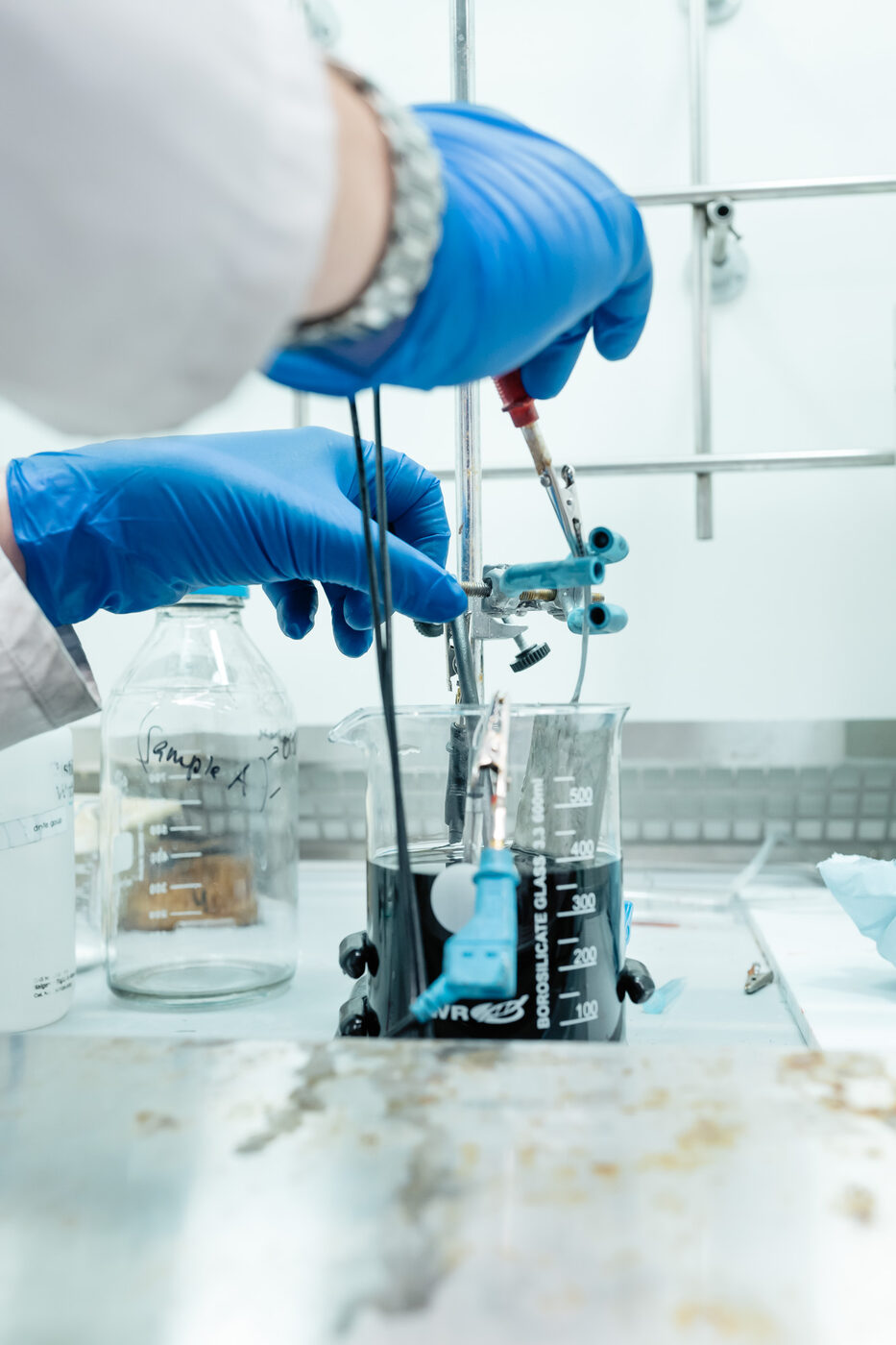
Thanks to some chemical changes we have made, our zinc-bromine battery is 30 per cent more efficient and 160 per cent more energy dense than a conventional vanadium system.
HalioGen Power is planning a 10-kilowatt-hour system, the size of an air conditioner, that can be easily installed on or in a house to store solar energy. The battery itself is non-flammable, and the team has also reduced toxicity compared to previous zinc-bromine batteries. This is because the battery contains liquid bromine rather than bromine gas.
We hope to have both systems fully commercialised by 2027,explains Le Fevre. The 32-year-old is relaxed about the technical hurdles. More importantly, the scientist, who recently spun off of the University of Manchester with HalioGen Power, has respect for the business world and the challenge of running a company.
I've always used to say to people, I could do it better. Now I really want to do it better.