BRINGING LIGHT INTO THE DARKNESS
How Pixel Photonics intends to scale single photon detection




Millions and millions of light particles buzz around in bright surroundings or illuminated rooms. A single beam of light alone consists of an infinite number of individual photons that enable our retinas to see what’s before them. A single photon could be enough to detect something. Although not yet possible with the naked eye, single photon detectors already make this achievable. However, they are expensive, large and difficult to integrate; in addition, they cannot detect multimodal
light, as would be required in medicine or biology.
A start-up from Münster has found a solution to these previous limitations: Pixel Photonics is well on the way to bringing light into the darkness in a big way. This enables the company to integrate detectors directly into photonic chips. Waveguide integration achieves maximum efficiency at every wavelength – and at an extremely high speed.
We have a technology that makes it possible to visualize individual photons. And all this in a wavelength range where our eyes no longer function, i.e., in the near-infrared range, where conventional technology cannot do this. Technically, this is extremely exciting because all our communication works via near-infrared,
explains CEO Nicolai Walter.
HOW THE TECHNOLOGY WORKS
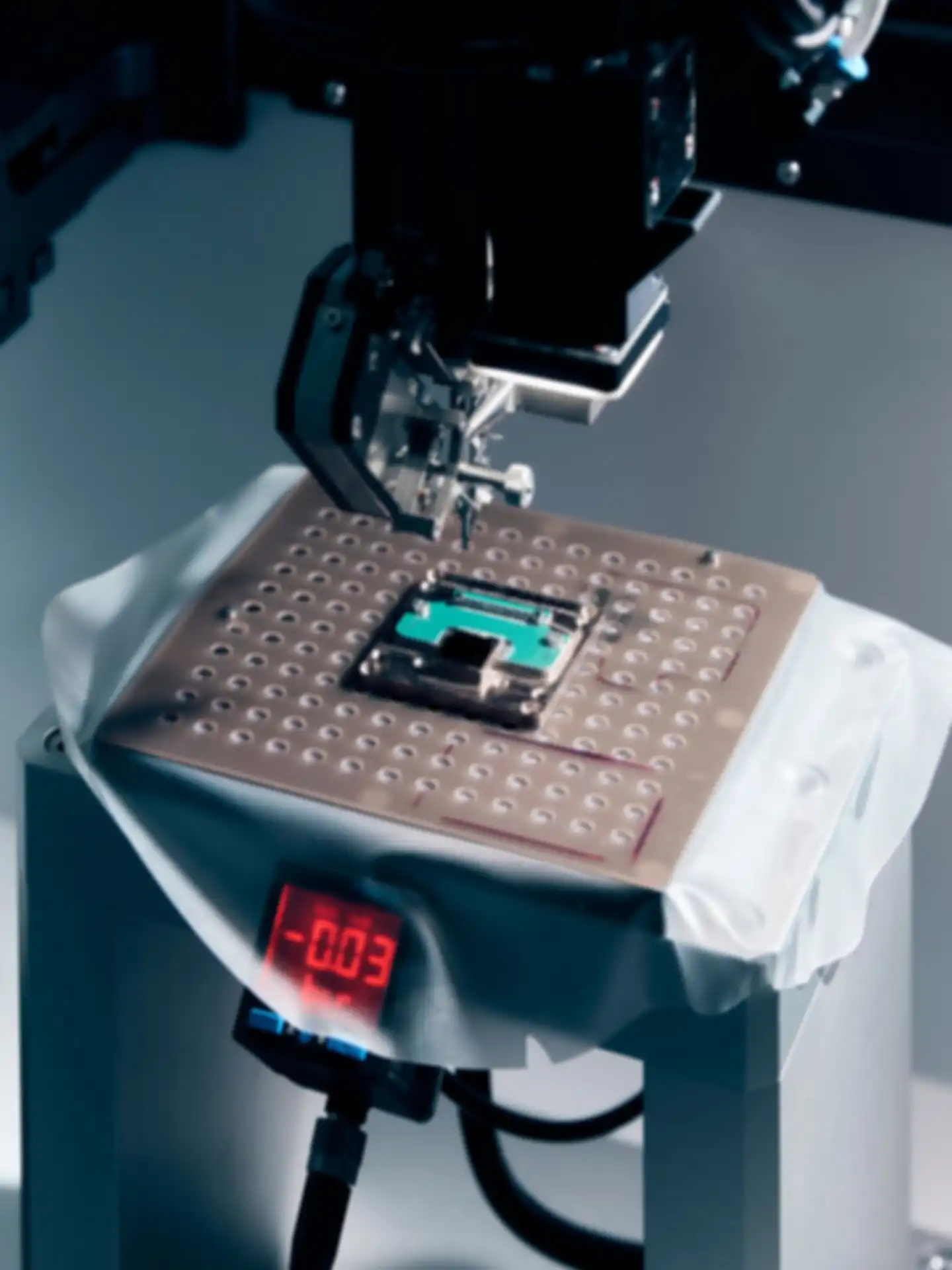
Pixel Photonics develops waveguide-integrated superconducting nanowire single-photon detectors (WI-SNSPDs). The detector is cooled to around 2.5 Kelvin – just above absolute zero. In this state, the nanowire becomes superconducting. As soon as a single photon hits the wire, it breaks so-called Cooper pairs and creates a local hotspot
. The superconductivity collapses, generating a short voltage pulse that produces the measurable click
signal. – comparable to a Geiger counter for light particles.
THE CRUCIAL DIFFERENCE
Conventional SNSPDs work with meandering nanowires that have to cover a large area. They require additional optical resonators to increase sensitivity – but this severely limits the spectral bandwidth. Instead, Pixel Photonics uses nanophotonic waveguides in which light is guided by total internal reflection. The evanescent light field interacts directly with the nanowire, resulting in almost 100 percent absorption – without any resonator. The absorption can simply be adjusted by changing the length of the nanowire.
The result: Counting rates of up to 2 gigahertz, jitter below 30 picoseconds and a spectral bandwidth from visible light to over 1,700 nanometers – significantly broader than any competitor. In addition, the nanowire is only around a tenth of the length of conventional SNSPDs, which enables ten times faster detection.
ON-CHIP INTEGRATION
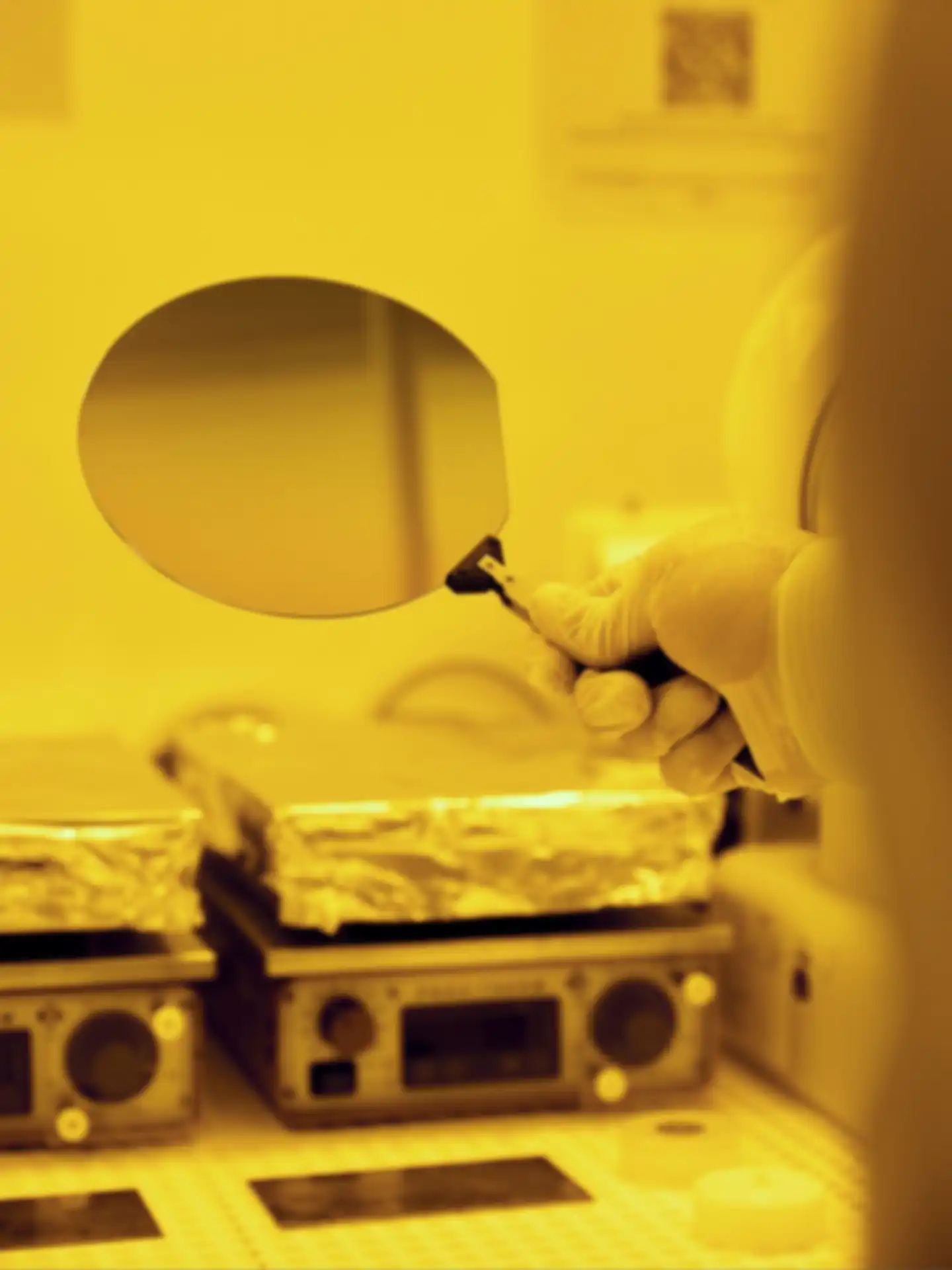
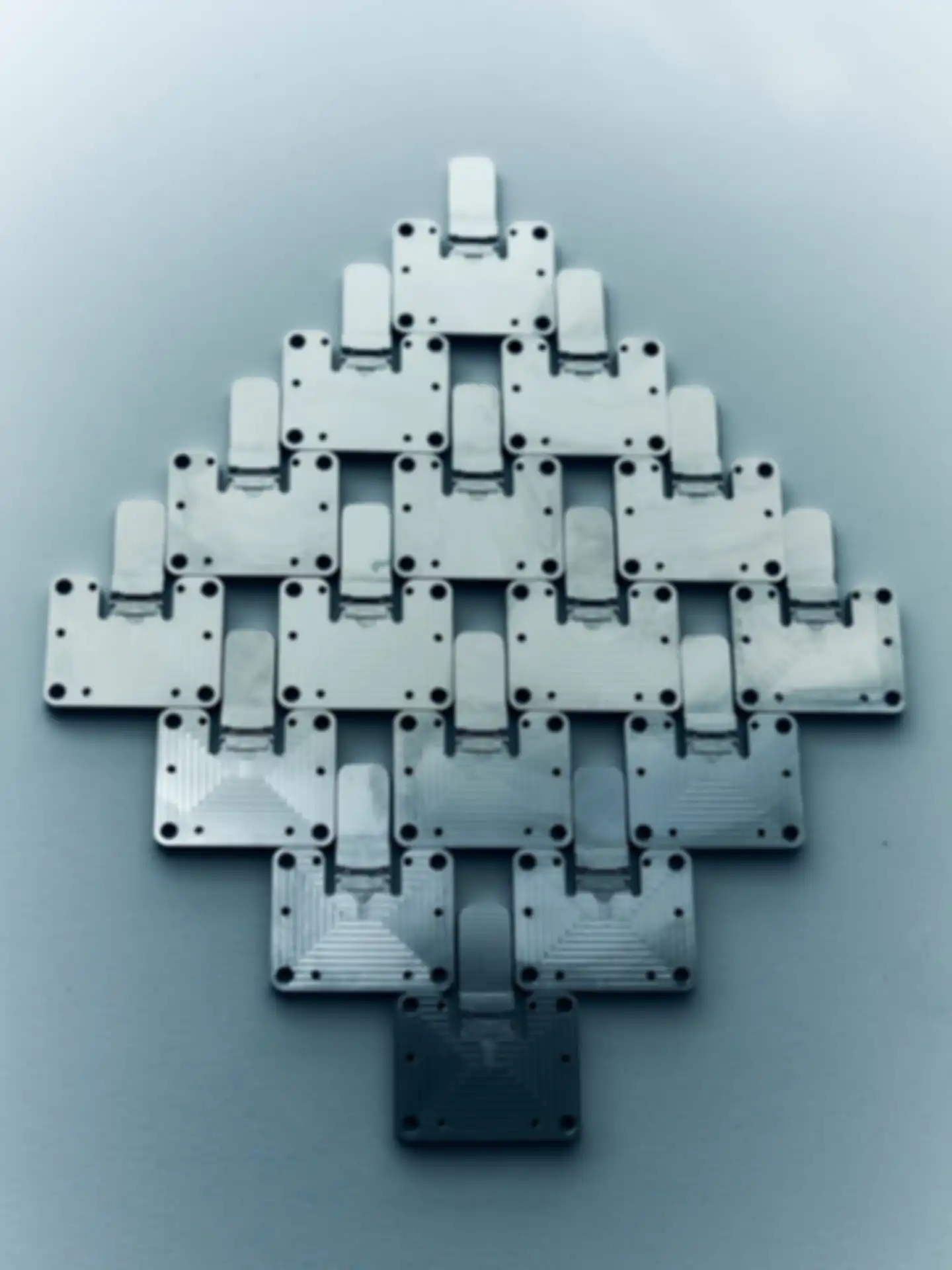
Pixel Photonics manufactures photonic structures, waveguides and SNSPDs directly on the chips. This allows hundreds of detectors to be integrated on one chip. Production is carried out using CMOS-compatible processes, which enables the transfer to industrial semiconductor production and will drastically reduce costs in the medium term.
MULTIMODAL – THE NEXT STEP
Current detectors primarily record individual spatial light modes. Pixel Photonics is working on the extension to multimodal light – as it typically occurs in the real world, for example, in fluorescence in biology or satellite communication through the atmosphere. The first designs can already detect disturbed
modes. In the long term, a hyperuniform
coupling concept aims to enable full multimodality and spatial resolution for imaging processes.
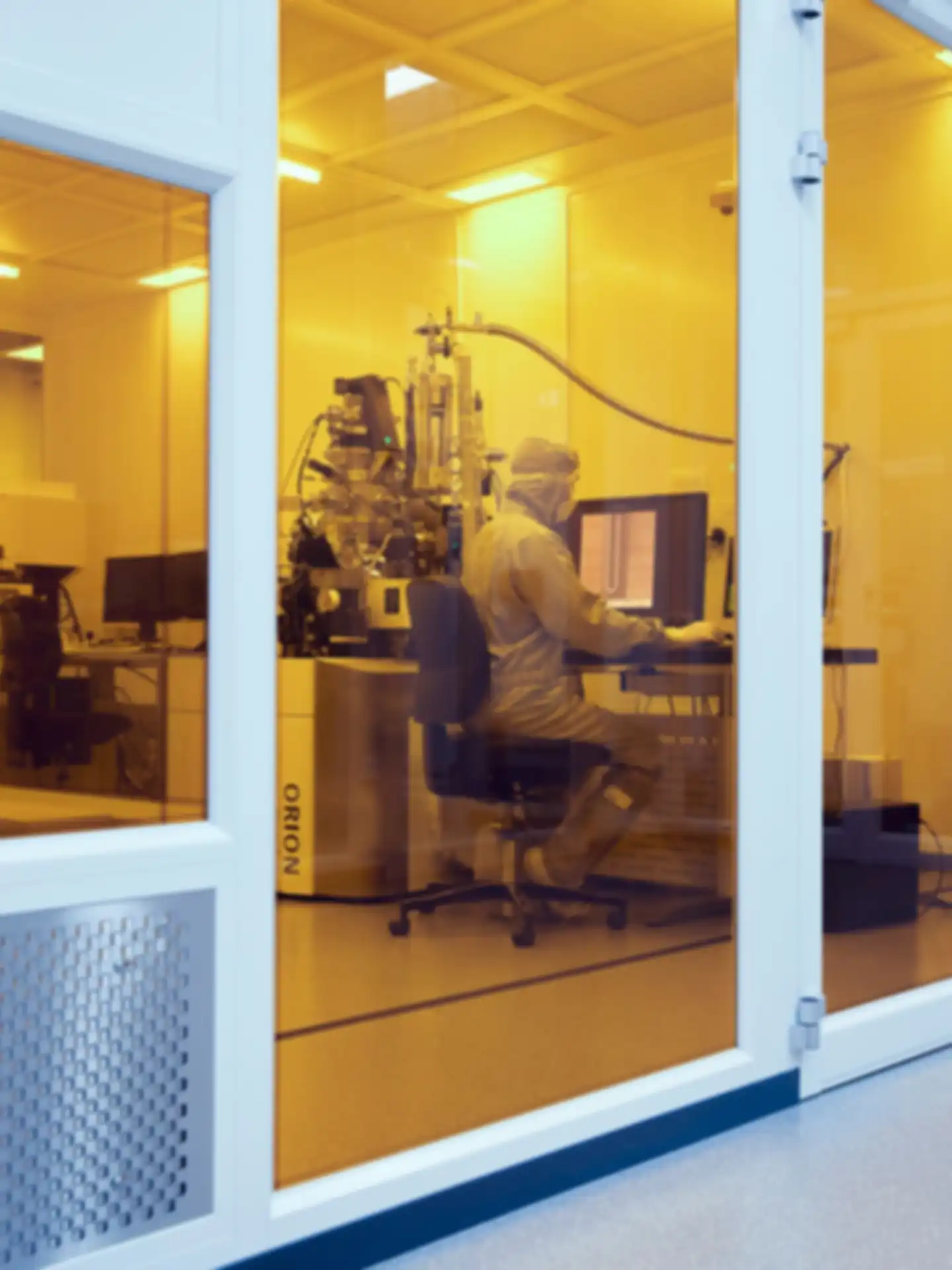
In physics, a single molecule that emits radiation is enough. It emits exactly one photon, and that is basically the fundamental, the smallest way of transmitting a signal – and you can detect that with our technology.
– Dr. Wladick Hartmann, Co-Founder and CTO
The technology is originally rooted in the field of quantum physics, but Pixel Photonics does not want to commit itself to this area and will instead explore what else is possible. With SPRIND and the start-up grant of EUR 1 million, we are venturing out of familiar territory and turning our attention to everyday applications in laboratories, diagnostics and defense. To this end, we conducted a joint market study with the aim of translating this enormous potential into meaningful, concrete applications.
But what makes the single-photon detector a platform technology? When something is irradiated with light, matter always reacts,
explains CEO Nicolai Walter, and different matter reacts differently due to the quantum properties of subatomic particles, molecules and so on. This means that there is a specific reaction – depending on whether it is an explosive, a cancer cell or something else. However, the reflected signal that contains this information is extremely small. With our technology, we can scan with all possible wavelengths and determine the signals at single-photon level.
BETTER MEASUREMENT UNDER DIFFICULT CONDITIONS
For example, in many measurement situations there is not enough light per se. This is still a dream of the future, but if a tumor is surgically removed, our technology could precisely identify the remission margins, i.e., where the cancer ends and healthy tissue begins,
explains CTO Dr. Wladick Hartmann. Consequently, neither too little nor too much is removed. This increases the chances of survival and reduces follow-up costs.
In the area of defense, the highly sensitive detectors could, for example, identify mines buried several meters deep, imminent danger in the water or the smallest quantities of explosives from a long distance.
Pixel Photonics already has some customers who are still currently taking measurements with larger devices – but the future lies in the chip into which the detectors are integrated, which enables an impressive spectral bandwidth – something that no other company in the world is currently able to achieve in this way.
Everything we do is really 'as deeptech as it gets'. We build hardware that needs to be cooled down and low-noise electronics in a clean room. We had to build up a lot of this know-how ourselves, because at the very beginning we sourced our cooling systems from Russia, for example,
says Nicolai Walter. Then, due to the war in Ukraine, a supplier was gone from one day to the next. It was a huge challenge for us back then, but we saw it as an opportunity, and now we have all the knowledge ourselves.

CONCENTRATED EXPERTISE AND SUCCESSFUL FINANCING ROUNDS
At the end of 2021, Nicolai Walter, Dr. Fabian Beutel, Dr. Martin Wolff, Dr. Wladick Hartmann and Christoph Seidenstücker founded Pixel Photonics together with Prof. Dr. Wolfram Pernice and Prof. Dr. Wolfram Schuck from the University of Münster. With four physicists, the founding team has a strong technical background. The first financing round followed in 2022 with an investment from Quantonation and the High-Tech Gründerfonds (HTGF); this was followed by further rounds and funding projects. In April 2026, the company announced total financing of EUR 13.5 million. The sum is made up of the first closure of a seed round of EUR five million and funding from the European Innovation Council (EIC) Accelerator amounting to EUR 8.5 million, of which EUR 2.5 million is a grant and EUR 6 million is equity. The seed round was led by Futury Capital and included participation from SPRIND, Kensho Ventures, and High-Tech Gründerfonds (HTGF).
This naturally creates ideal conditions for achieving the ambitious long-term goals: On the company side, that would be to develop our products in such a way that they can both be sold off the shelf and scaled up commercially,
explains Dr. Wladick Hartmann. In addition, our dream is to really do something that benefits everyone, for example, in the field of life sciences, particularly in cancer diagnostics. Our system can deliver massive added value here – as well as in the area of defense for securing critical infrastructure.
IT IS EXTREMELY REFRESHING TO SEE HOW SPRIND OPERATES. AND THAT IS GOOD FOR GERMANY.
– Nicolai Walter, Co-Founder and CEO
Cooperation with the Federal Agency for Breakthrough Innovations is particularly important to the team – from networking and visibility with investors to events such as VENTURE SPRIND: We see SPRIND as an essential building block in the innovation ecosystem in Germany,
emphasizes Nicolai Walter. There is also a great desire to stay and manufacture in Europe or, at best, Germany – SPRIND can only help to keep this bright light in Europe.
SPRIND AND PIXEL PHOTONICS