SPRIND IS STATE-FUNDED YET ENJOYS SPECIAL FREEDOMS. HOW CAN YOU LEVERAGE THIS UNIQUE ROLE WITH REGARD TO SOCIAL INNOVATION?
Many excellent solutions fail not because of the idea itself, but because of the market entry process – particularly in the education or social sectors. We aim to overcome these hurdles. As part of a federal agency, we have direct access to government ministries and can strategically position innovations. At the same time, we view ourselves as a platform for external ideas: we organize challenges, specifically reach out to startups, and mobilize innovative potential from outside the public administration.
SO, YOU INTEND TO FOCUS PRIMARILY ON EXTERNAL IMPULSES?
Absolutely. The best ideas for innovation rarely emerge from existing, established structures. They originate all across the country – within startups, civil society, or the research community. Our mission is to identify these ideas, provide the funding to get them off the ground, and pave the way for their practical implementation. This also involves adapting successful models from abroad. In the social sector, copying
is expressly encouraged; traditional competitive dynamics or IP-related logic simply do not apply. If something works well elsewhere, we should adopt it.
CAN YOU PROVIDE AN EXAMPLE FROM ABROAD THAT SHOULD BE REPLICATED IN GERMANY AS QUICKLY AS POSSIBLE?
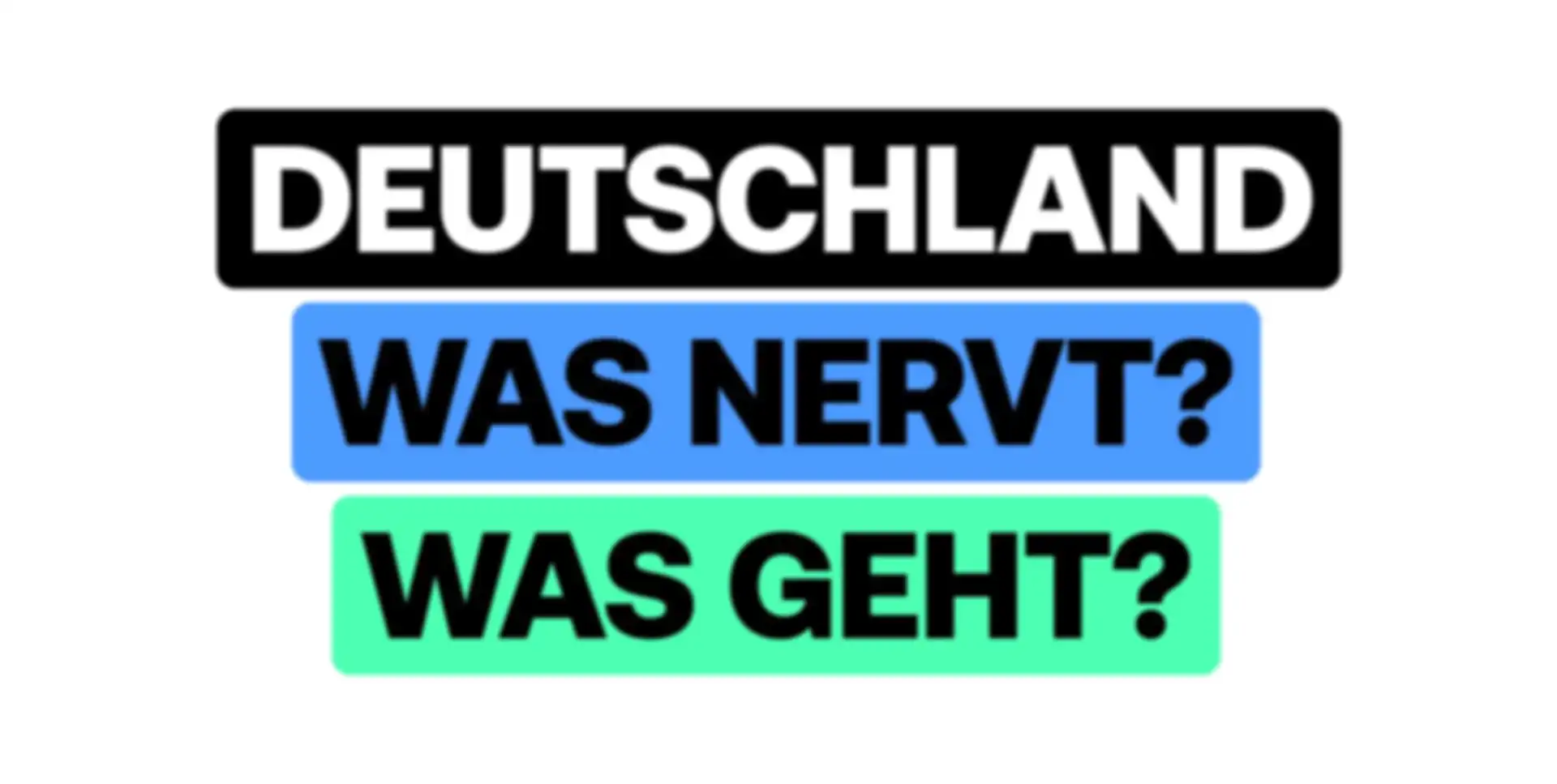
A prime example involves digital participation models, such as those found in Taiwan. There, they have succeeded in significantly boosting public trust in government institutions through innovative formats for citizen engagement. With our initiative, Germany what sucks? Germany what's up?
, we aim to bring this demonstrably successful system here and raise awareness of it. We are also looking abroad for inspiration in the realm of funding models. In the UK, there are models in which state support is directly tied to the societal impact of a social breakthrough innovation – for instance, the number of people a project helps get into employment. This creates new incentives and has fostered a robust ecosystem.
WHAT OTHER TOPICS DO YOU INTEND TO TACKLE RIGHT FROM THE START?
Education is a key area – one where we aim to be among the global leaders. In parallel, we are focusing intensively on the welfare state, retirement provision, financial literacy, and state modernization. Another example lies in the realm of social media: We are currently evaluating a project working on a competitive algorithm designed to reduce polarization and, conversely, strengthen connections. That would be a classic moonshot
– one that, if successful, would have enormous positive societal repercussions.
HOWEVER, TRADITIONAL PROJECT FUNDING INITIATIVES ALSO SEEK OUT SOLUTIONS OF THIS KIND. WHAT DISTINGUISHES YOUR WORK FROM CONVENTIONAL FUNDING PROGRAMS?
We enjoy significantly greater freedom and can act with greater agility. Above all, however, we take a different approach: We do not provide long-term funding for projects; instead, we always think in terms of milestones and systems. This means we do not merely ask whether an idea is sound, but also how it can be translated into practice – and what broader societal impact it will generate. To achieve this, we employ a variety of instruments, ranging from results-based financing to strategic partnerships.